
Balance Wheel Regulation
Balance wheel regulation is used on clocks that do not rely on a pendulum for timekeeping. Instead, these clocks regulate speed through a spring-driven balance wheel and escapement assembly, commonly referred to as a platform escapement or balance unit. This system allows the clock to operate reliably regardless of orientation and makes it suitable for portable, shelf, and mantel clocks.
Balance-regulated clocks are common in carriage clocks, tambour mantel clocks, and many wall clocks produced in the late 19th and early 20th centuries.
Identifying Balance Wheel–Regulated Clocks
Clocks regulated by a balance wheel typically share the following characteristics:
No pendulum or visible pendulum leader
A compact escapement assembly mounted on top or rear of the movement
A balance wheel that oscillates rapidly back and forth
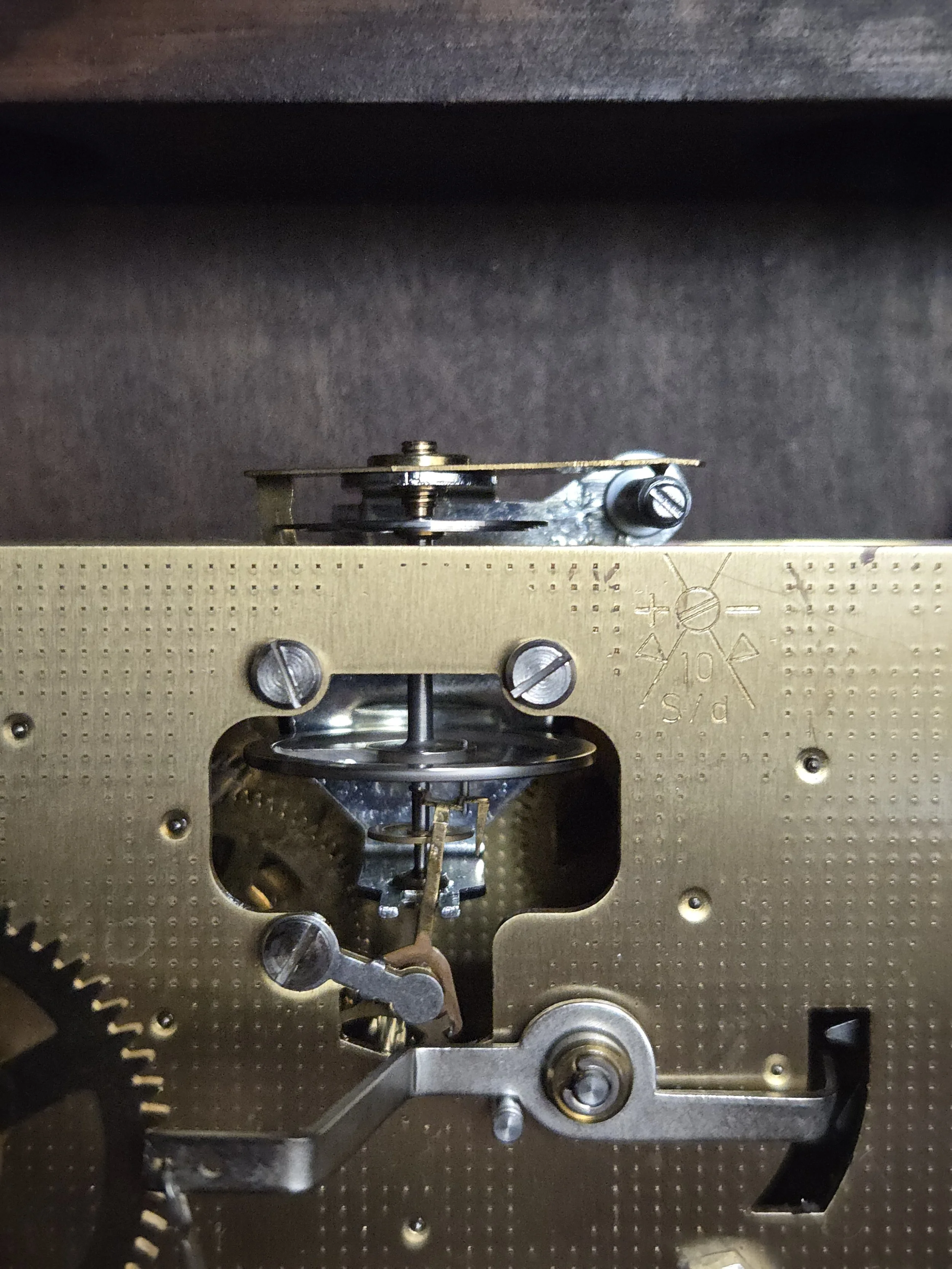
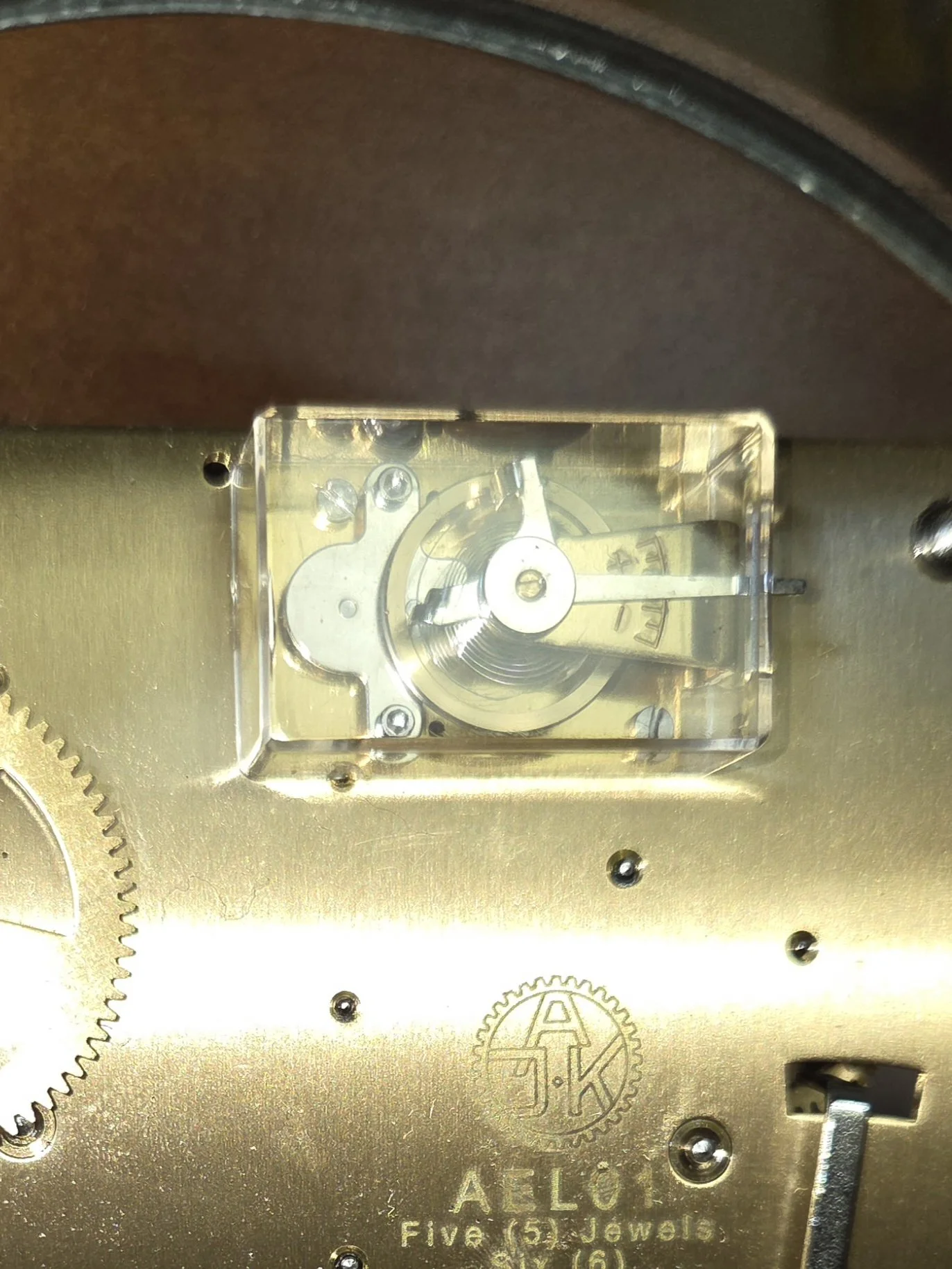
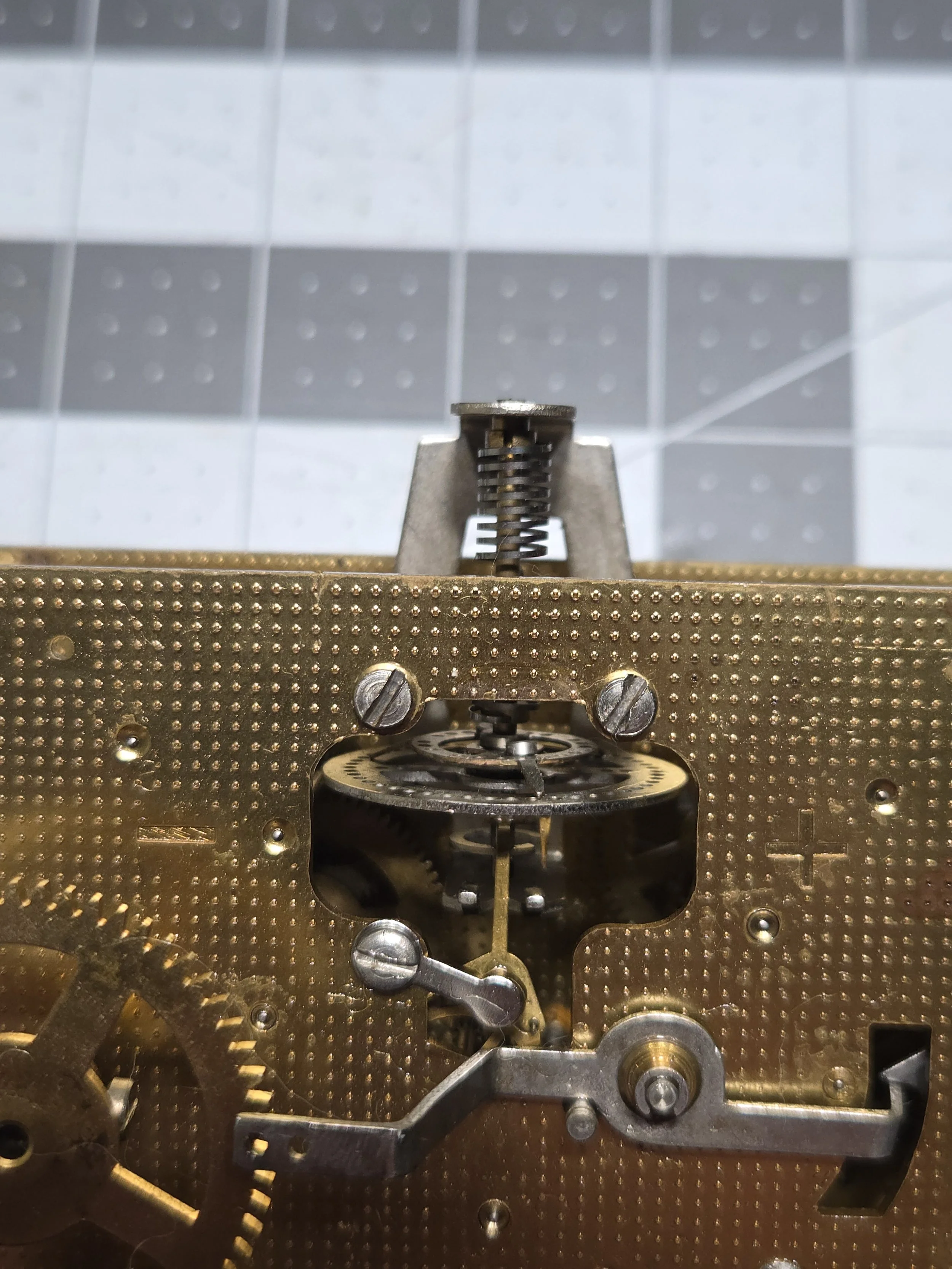
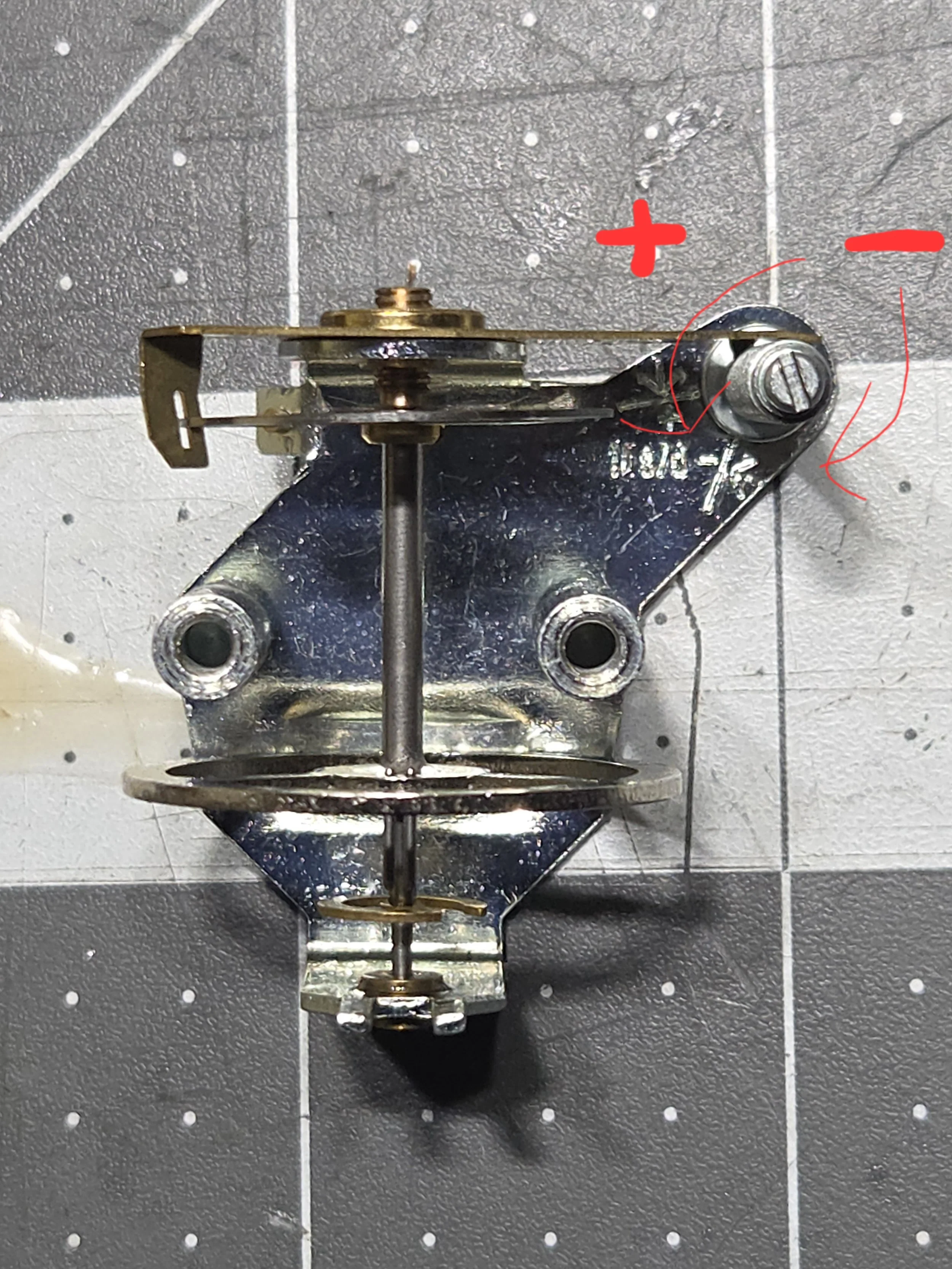
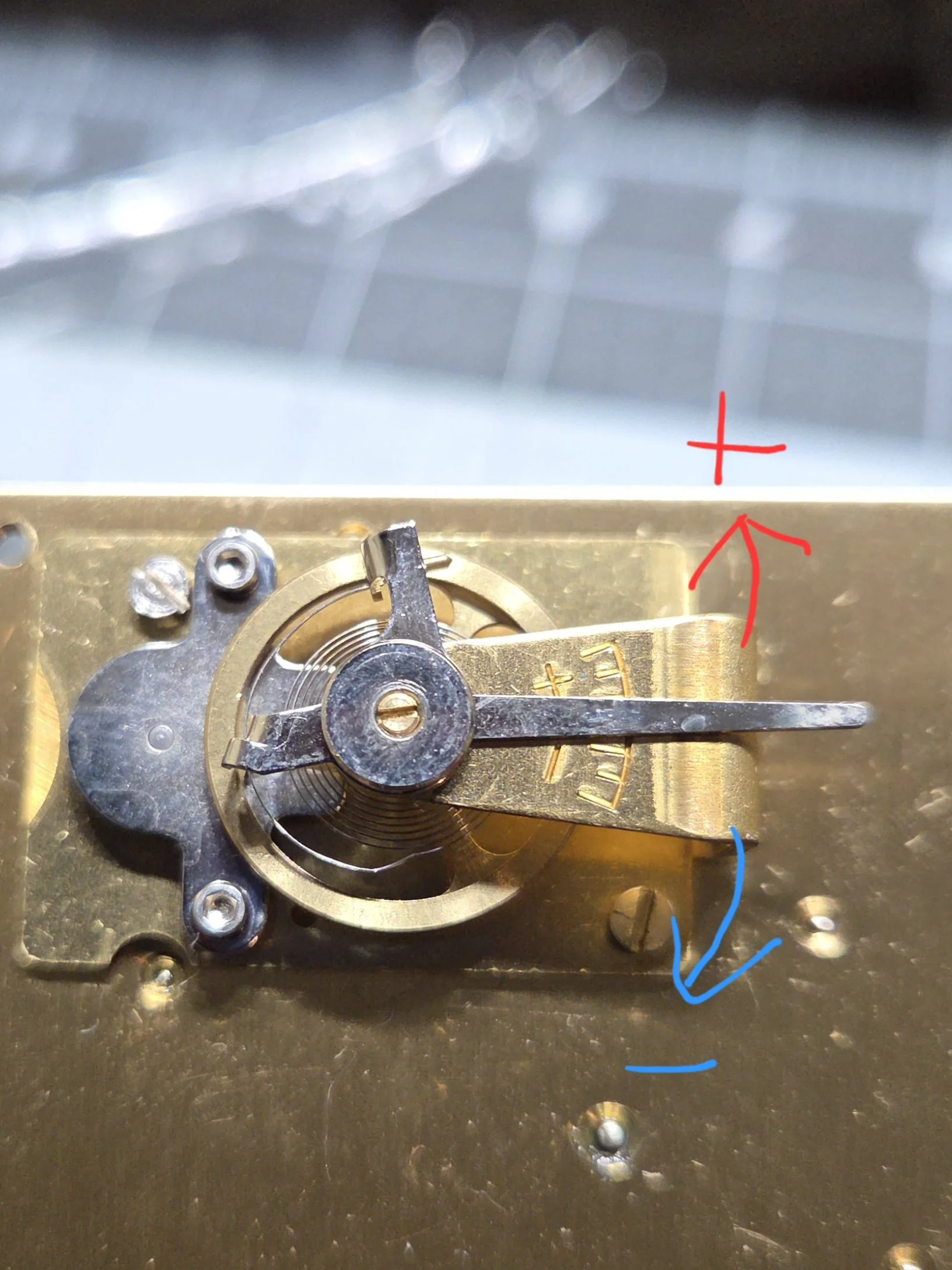
A regulator lever or fine adjustment screw marked F / S, Fast / Slow, or + / –
Unlike pendulum clocks, these clocks are not affected by case height and require no vertical clearance for operation.
Placement & Stability
Although balance wheel clocks are less sensitive than pendulum clocks, proper placement still affects performance.
Place the clock on a firm, level surface
Avoid vibration from nearby appliances or foot traffic
Keep away from strong magnetic fields and heat sources
Ensure the case sits flat and does not rock
Balance wheel clocks do not require beat adjustment in the traditional pendulum sense, but excessive tilt can still affect timekeeping.
Understanding Balance Wheel Regulation
Timekeeping speed is controlled by the effective oscillation rate of the balance wheel. Regulation is achieved by altering the balance’s restoring force or inertia through a regulator lever or screw.
General principles:
Increasing the balance rate causes the clock to run faster
Decreasing the balance rate causes the clock to run slower
Adjustments should always be small and deliberate.
Step-by-Step Regulation Procedure
Step 1: Locating the Regulator
The regulator is typically found:
On the balance platform itself
Accessible from the rear of the movement
Sometimes visible through a top or rear glass panel
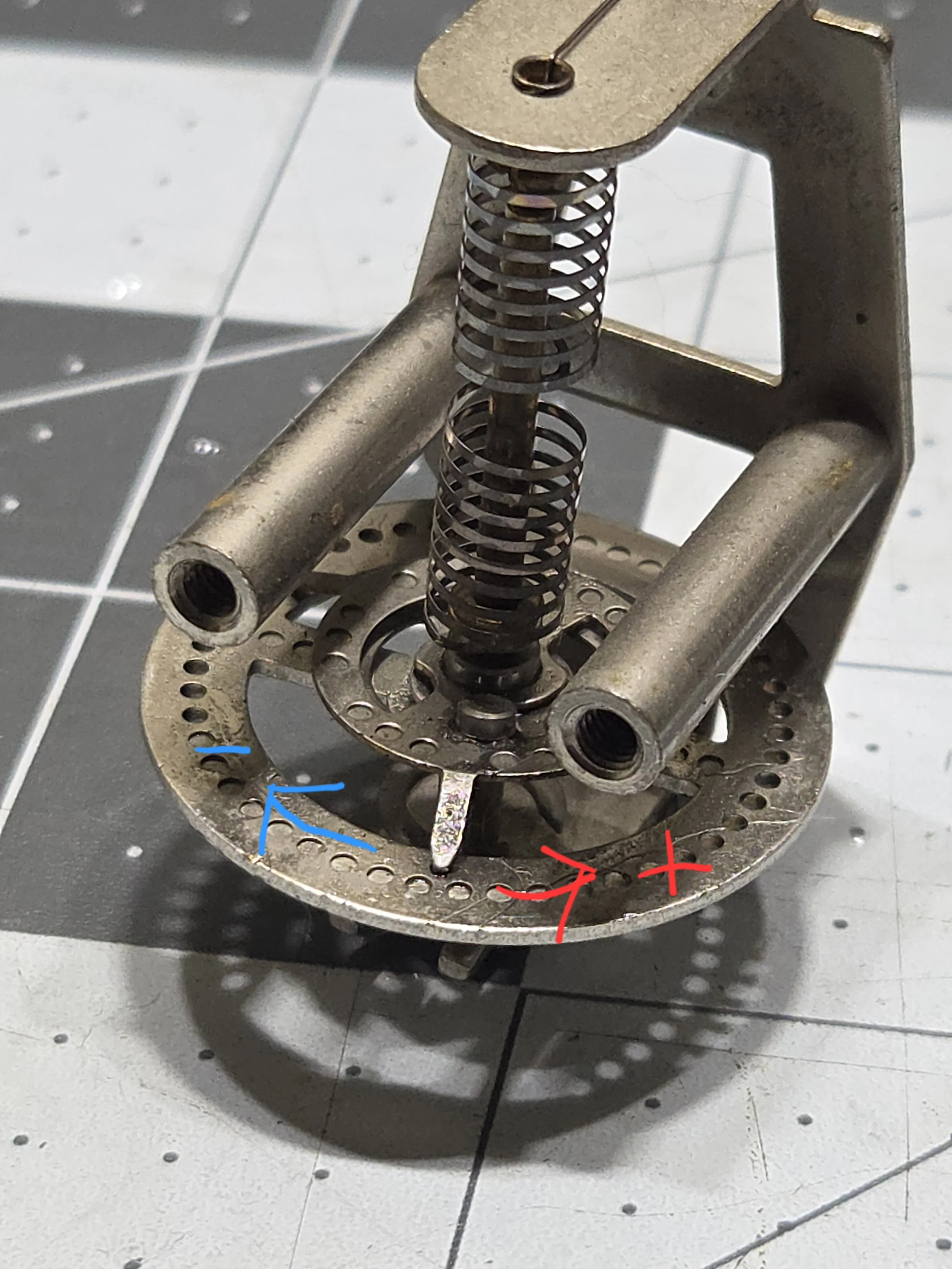
Common regulator types include:
Sliding regulator levers
Micrometer screws
Index arms acting on the balance spring
Look for markings such as F / S, Fast / Slow, or + / –.
Step 2: Adjustment Direction
Regulator markings indicate direction, but the following rules generally apply:
Moving the regulator toward Fast increases the rate
Moving the regulator toward Slow decreases the rate
Clockwise or counterclockwise rotation depends on the regulator design
Always observe the markings on the movement rather than assuming direction.
Step 3: Making Adjustments
Proper regulation requires restraint.
Move the regulator in very small increments
Typical adjustment is equivalent to 1–2 mm of lever travel or a fraction of a screw turn
Never move the regulator from one extreme to the other
After each adjustment:
Allow the clock to run for at least 24 hours
Compare against a known accurate time source
Multiple small corrections are safer than one large change.
Step 4: Avoiding Over-Adjustment
Over-adjustment is the most common mistake.
Signs of over-adjustment include:
Clock gaining or losing several minutes per day
Inconsistent timekeeping
Uneven or erratic balance motion
If over-adjusted:
Return the regulator closer to its original position
Resume adjustments in smaller increments
Balance wheel systems are sensitive and respond quickly to changes.
Step 5: Observing Proper Balance Wheel Operation
A properly operating balance wheel should:
Oscillate evenly side to side
Move freely without contacting surrounding parts
Return consistently to center
If the balance wheel:
Hesitates
Rubs or binds
Stops intermittently
Regulation alone will not correct the issue, and mechanical service may be required.
Maintenance Notes
Never oil the balance wheel or balance spring yourself
Do not attempt to bend or reshape the balance spring
Professional servicing is recommended every 5–10 years
The balance assembly is one of the most delicate components in any clock.
When to Stop & Call a Technician
Stop regulating and consult a technician if:
The clock will not respond to regulator adjustments
The regulator is already near its Fast or Slow limit
The clock gains or loses time erratically
The balance wheel hesitates, rubs, or stops intermittently
These conditions typically indicate mechanical wear, contamination, or balance assembly issues rather than a regulation problem.